

Rioja beats enotourism records and holds onto top spot in wine markets in 2023
- DOCa Rioja reaches even more milestones, with 880,000 winery visits, a 186-million-euro impact on the region’s economy, and an ever-growing enotourism offer, consolidating its position as the absolute leader in the sector
- Despite the poor performance of all wines with Designation of Origin status in 2023, Rioja was able to keep its national market share above 38% for red wines, and even recorded 8.4% growth for white wines, propelling it to second place
- Although wine import markets were generally weaker, Rioja managed to build on its position, accounting for 36.8% of all exports of Spanish Designation wines
The Rioja Qualified Designation of Origin recorded a record-breaking 879,423 visits to its wineries in 2023, 17.5% more than the previous year, surpassing the previous high of 858,107 visits before the pandemic. These figures are confirmation of Rioja’s continued upward trajectory – which was briefly interrupted by the pandemic in 2020 – thus reaffirming its position as the undisputed leader of Spanish wine and establishing itself as a prime international destination.
The Annual Report 2023, published today by the DOCa Regulatory Council, highlights these numbers, taken from the “DOCa Rioja Enotourism Observatory 2023” report, whose sixth edition corroborates the Denomination’s continuing growth. Another indicator that is also trending upwards is the average expenditure per winery visitor, which has risen to €37.89, outdoing the previous high of €34.66 seen in 2019. In 2023, the overall economic impact of enotourism in Rioja stood at almost 186 million euros (€185,938,645), representing a leap of 30.4 million euros over the previous year, creating both value and jobs in the Designation’s wineries and in the region as a whole.
Another noteworthy takeaway from the report is the continued increase in international demand, with Rioja welcoming 287,561 foreign tourists over the course of the year, which make up 33% of the total number of visitors, up from 29% last year. The countries that sent the most visitors in 2023 were the USA (27%), United Kingdom (16%) and France (14%), although Germany and the Nordic countries are gaining ground on them.
Additionally, Rioja wineries’ themselves are ramping up their investment in enotourism, seeing it as a way to enhance their business and adapt to visitors’ needs. More specifically, the wineries from the DOCa studied in the report invested more than 2 million euros in enotourism in 2023. With that in mind, it is evident why 67% of wineries believe that enotourism plays a more necessary and important role in their business each day.
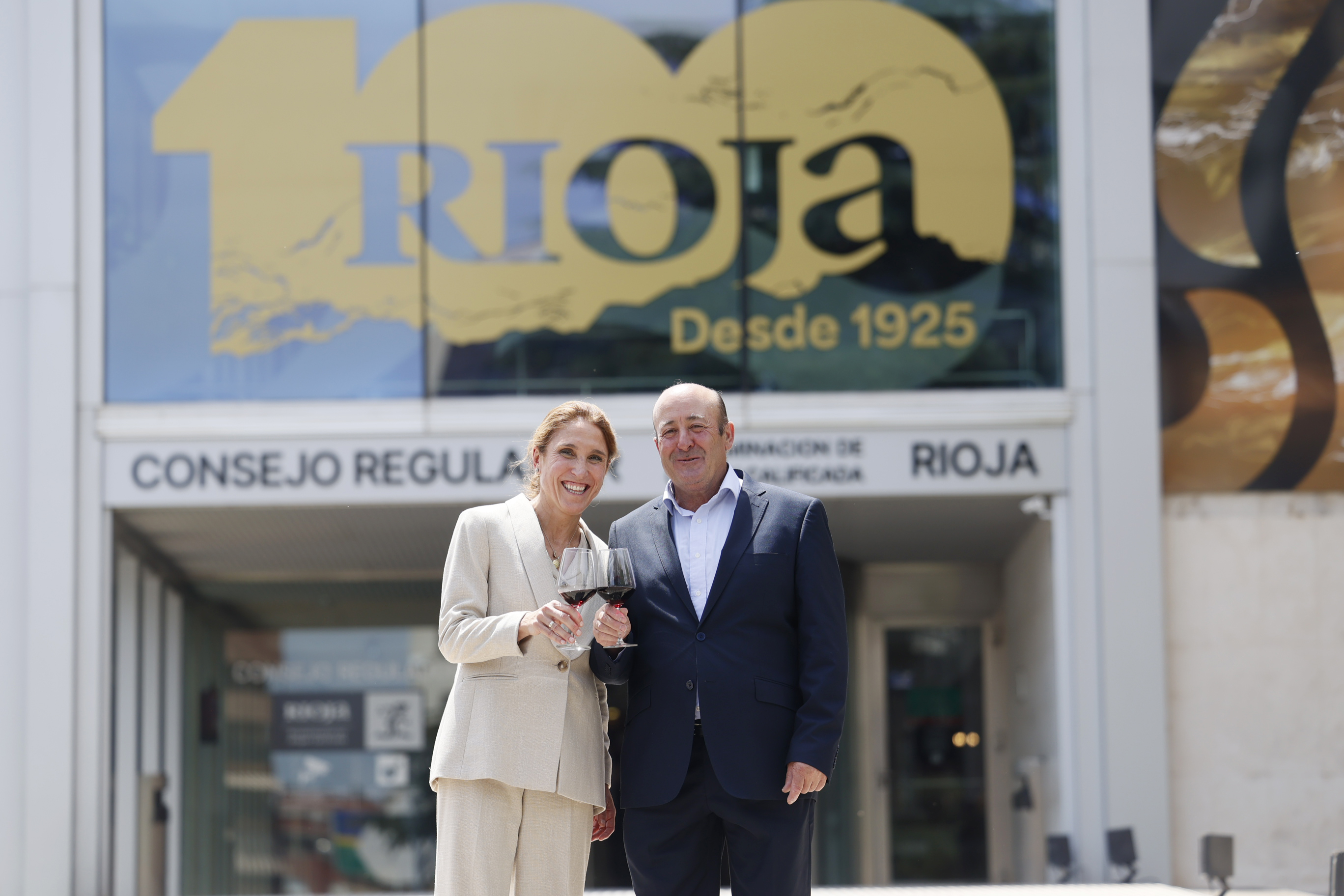
These figures were presented to the sector this morning at the headquarters of the Regulatory Council. In addition to analysing DOCa Rioja’s 2023 market performance and consolidating statistics, talks were given by José Luis Lapuente, general manager of the Regulatory Council; Manuel Romero, managing partner of Dinamiza Asesores, the company responsible for preparing the DOCa Rioja Enotourism Observatory 2023 report; Ricardo Alcón, client development manager at NielsenIQ; and Rafael del Rey, general director of the Spanish Wine Market Observatory.
Manuel Romero ended by remarking that “in 2023, enotourism in DOCa Rioja demonstrated its outstanding capacity for recovery and continues along the path of sustained growth, leaving the pandemic behind it.” This is made evident by the 17.5% increase in visitors over 2022’s figures, and a 2.5% jump over the record-breaking numbers recorded in 2019. What is more, this growth is even greater in terms of value: the economic impact of enotourism was 19.5% more than in the previous year, generating 62 million euros in the wineries and 186 million euros in the region as a whole. This is principally a result of the fine work of Rioja’s wineries and their teams of professionals who continue making enotourism a priority by developing more premium services – at a higher cost and with greater levels of personalization – and investing more in this area.”
2023 sales performance
As detailed by the Regulatory Council in its trade balance 2023, published in February, Rioja held onto its market position even amidst a poor year for wine in which its sales volume fell to 325,197,801 bottles. Today’s Annual Report provides new conclusions based on a detailed study undertaken by NielsenIQ, a leading audience measurement, data, and market analysis consultancy.
This report shows that the sale of wines with a Designation of Origin fell by 2% in Spain in 2023, with red wines being worst hit, dropping by 3.7%. In line with market trends, the sales volume of Rioja wines also took a step back, decreasing by 3.2%. Despite this, the DOCa continues to maintain a commanding lead in the DO wines category with its 27.2% market share, according to the consultancy. In the case of Rioja red wines, the region’s flagship products, although the DOCa’s performance faltered slightly this year, it still monopolizes the sector with its 38.3% market share, over half a point more than in 2021. Sales of rosé wines from Rioja plummeted, even though the region kept hold of second position in market share by a comfortable margin, while Rioja white wines experienced impressive growth, with its market share skyrocketing from 7% to 8.4%, resulting in the region becoming the second largest Spanish white wine Designation in terms of sales.
According to Ricardo Alcón, “given the doubt surrounding the national market, which saw the sale of wines with a Designation of Origin drop by 2% in 2023, DOCa Rioja continues to boast a strong advantage, recording a market share of 27.2%, just as it did in 2021. DOCa Rioja white wines deserve a special mention for their impressive performance, with their market share rising to 8.4%, while the region’s principal market, red wine, maintained its market share of 38.3% in terms of litres sold.”
Among the figures unveiled today are the key indicators provided by the OEMV regarding customs clearance in 2023. As stated by the Regulatory Council, although exports of Rioja took a step back in 2023, seeing its figures drop by 6.6%, the OEMV today revealed that, according to its data, wines from DOs in the rest of Spain performed much worse (-14.6%), which means that DOCa Rioja bolstered its competitive position in the export market. As a result, Rioja wines made up 36.8% of Spanish DO wine exports, two percentage points more than in 2022, and increased its exports to seven key markets: United Kingdom, China, Canada, the Netherlands, Norway, Mexico and Ireland.
Rioja also made headway in terms of international sales over other global wine producers, further strengthening its market position. Double-digit drops were recorded in a number of wine-producing powerhouses in 2023, including Chile, the USA, Argentina, Australia and France (-10%); Rioja outperformed them all, and consequently achieved a market share of 1.9% in terms of international sales of packaged wine.
As detailed in Rafael del Rey’s presentation, “the slight drop in Rioja wine exports in 2023 came against a backdrop of widespread – and even more dramatic – decreases by other Spanish wines and international wine markets. In fact, Rioja made a small gain in the Spanish Designation of Origin wine market, with the region representing 40.6% of the value of total exports and increasing its share of the international packaged wine market to 2.1%.”
Full list of DOCa Rioja’s activity in 2023
In addition to presenting the sales figures and numbers relating to enotourism in the Rioja Qualified Designation of Origin, the Regulatory Council’s Annual Report – published only as a digital version since 2021 – also recaps the main achievements of the Designation throughout 2023, with certain sections of the report being dedicated to Rioja’s performance in key areas such as sustainability, national and international promotion and Rioja Wine Academy.
The document’s introduction, signed by Fernando Ezquerro, president of the DOCa Rioja Regulatory Council, comments that these results “reflect consumers’ trust in Rioja wines and, in the case of enotourism, the region as a whole, whose acclaimed quality and excellence have enabled us to become one of the most respected and prestigious designations in the entire world.
In light of the extremely challenging circumstances experienced in 2023, it is vital that we continue to highlight the diversity and richness of the Designation, which acts as the socioeconomic engine of the region in which it operates with dedication, steadfastness and responsibility, while placing the common interests of Rioja above all else.”
You can view the full DOCa Rioja Annual Report 2023 here.